
One Day I Will Be Danish: Or, Why Their Furniture is Always So Amazing
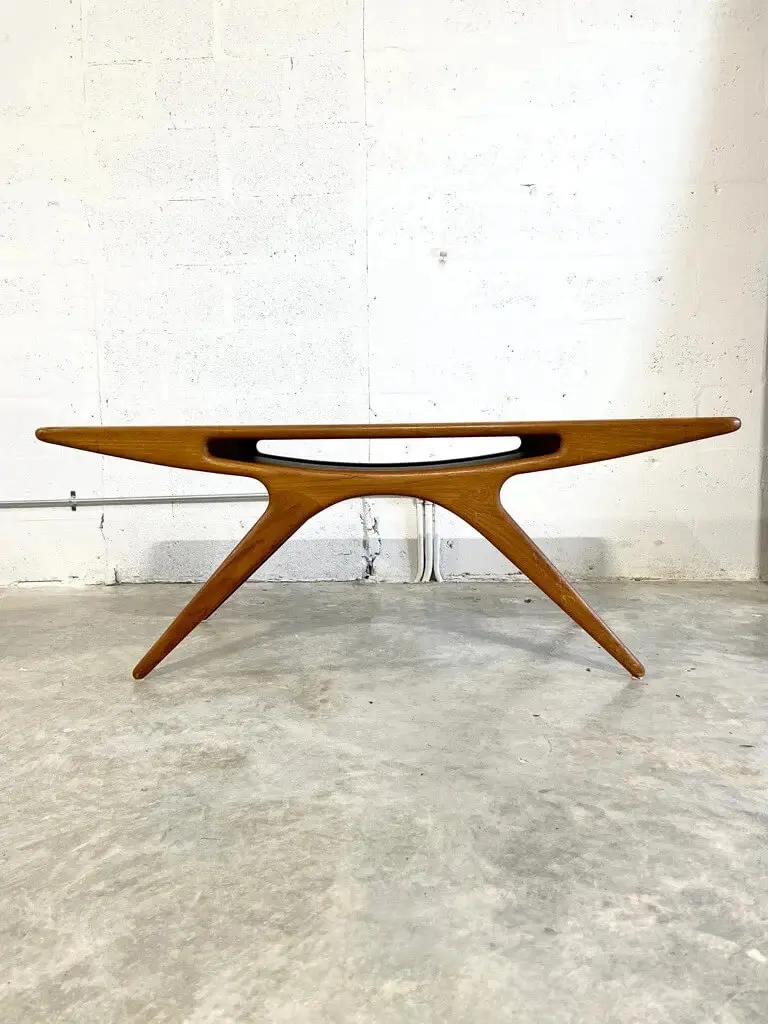
Why Does Danish Furniture Still Look So Good? (Spoiler: It's Not Just the Teak.)
I'm light years away from my home being like this buttttttt if you've ever walked into a home and immediately thought, This place just feels right, there's a decent chance Danish design had something to do with it. Maybe it was a sleek teak dining table, a sculptural lounge chair, or a walnut credenza that's somehow older than your parents but still looks fresher than half the furniture at the furniture superstore. That's the thing about Danish furniture. It has a habit of making everything around it feel a little calmer, a little warmer, and a lot more timeless. (Side note: aren't the Danish supposed to be SUPER happy?)
As someone who spends a good chunk of my life walking through homes, I notice these things. Buyers notice them too, even if they don't realize why. They'll rarely say, "I appreciate the restrained Scandinavian aesthetic," but they'll absolutely say, "This house feels so peaceful," or, "I could picture myself living here." That's not an accident. Great design has always been more about how a space feels than how loudly it announces itself.
Most people think Danish furniture suddenly appeared during the Mad Men era, when every living room seemed to acquire a record player and a cocktail cart. While the 1950s and 60s certainly put Danish designers on the world stage, the philosophy behind the furniture had been developing for centuries. Denmark has a long tradition of skilled cabinetmakers who believed furniture should first be useful, beautifully made, and built to last. Decoration came second. If a piece couldn't survive everyday life, it wasn't considered good design no matter how pretty it looked.
That mindset created something surprisingly radical. Instead of chasing whatever style happened to be fashionable that year, Danish designers focused on proportion, craftsmanship, natural materials, and comfort. They believed beauty wasn't something you glued onto a piece of furniture. It emerged from getting all the fundamentals exactly right.
After World War II, the timing couldn't have been better. People wanted homes that felt lighter and more hopeful after years of hardship. Danish designers like Hans Wegner, Arne Jacobsen, Finn Juhl, and Børge Mogensen responded with furniture that was elegant without being fussy and modern without feeling cold. Their work spread around the world, and decades later many of those same pieces are still being made because...well...when you get something right the first time, there's not much need for an update.
That's one of the reasons I love working with authentic mid-century pieces into homes whenever it makes sense. They don't scream for attention. They quietly elevate everything around them. A vintage teak credenza doesn't need to be surrounded by an entire Scandinavian showroom to work beautifully. In fact, mixing one or two well-crafted pieces with more contemporary furnishings often creates a space that feels more collected than decorated. It tells buyers that this home has a story instead of looking like it was furnished in a single Saturday afternoon shopping spree.
And here's my perhaps slightly controversial opinion (gasp!): Danish furniture isn't actually about minimalism. It's about editing. There's a difference. Minimalism can sometimes feel sterile, like you're afraid to leave a coffee mug on the counter. Danish design simply asks whether each piece deserves to be in the room. When every chair, table, lamp, and cabinet has a purpose and is thoughtfully chosen, your eye gets to relax. The room doesn't have to work so hard because nothing is competing for attention.
That philosophy translates surprisingly well to preparing a home for sale. One of the biggest mistakes I see isn't that people own the "wrong" furniture (bahhhh, okkkkk maybe SOME of it is wrong). It's that they own too much of it. A room with fewer, better pieces almost always photographs better, feels larger, and allows buyers to imagine their own lives unfolding there. Good staging isn't about stripping away personality. It's about giving the best parts of the home enough breathing room to shine.
Maybe that's why Danish furniture has aged so gracefully while so many trends have come and gone. It was never designed to be trendy in the first place. It was designed around human beings: how we sit, gather, eat, work, and live together. That's a remarkably durable idea.
So the next time you spot a fifty-year-old teak sideboard at an estate sale or wonder why that vintage wishbone chair still looks effortlessly current, remember that you're not just looking at old furniture. You're looking at generations of people asking a deceptively simple question: How can we make everyday life a little more beautiful? And a little simpler.
Right now I'm still living with kids so my house feels at every moment like a family of racoons shacked up with circus performers to throw ragers every night, but ONE DAY, I WILL BE DANISH :)
Categories
Recent Posts