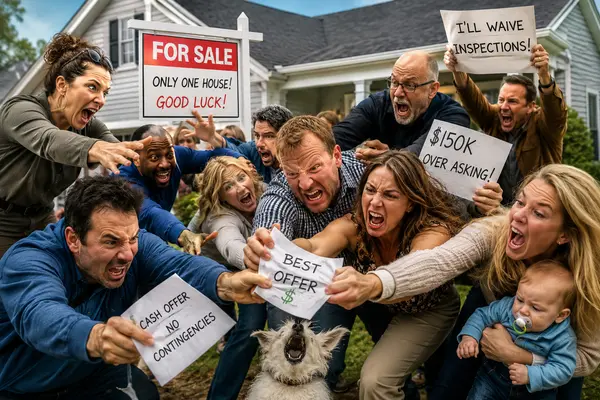
Does Your House Have to Be on Zillow to Sell?
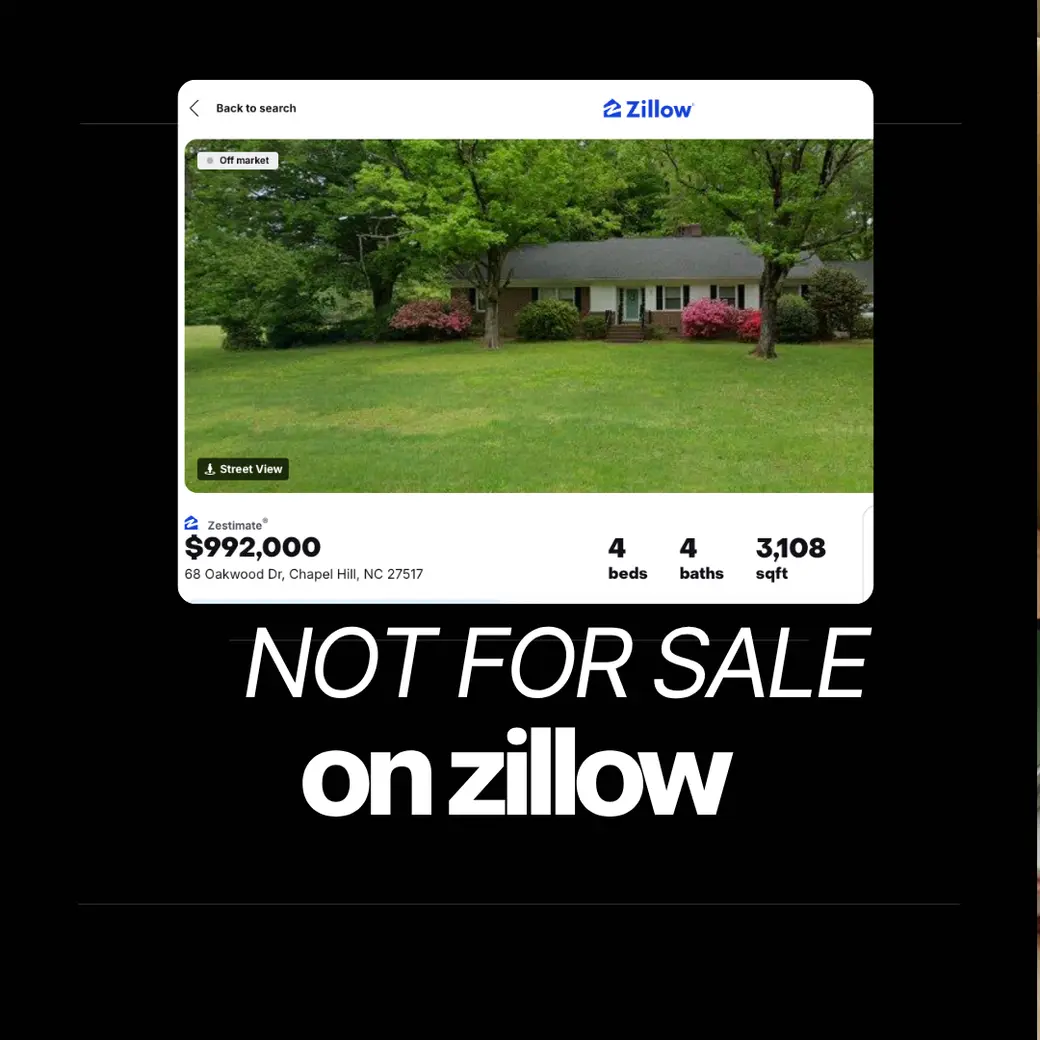
Does Your House Have to Be on Zillow to Sell?
As one of the top-producing agents in the Triangle, I have sold a lot of houses over the last decade. I have spent an enormous amount of time looking at listings, tracking buyer activity and figuring out what actually causes a house to sell.
I need you to know something Zillow is probably not going to tell you:
Zillow is frequently inaccurate. Shockerrrrrrrrrrrr!
Boo, I have seen Zillow publish incorrect taxes, square footage, room dimensions and sales histories for my listings—and then been unable to get the information corrected.
The most ridiculous example was a house Zillow said had sold two months earlier for $400,000. In reality, my sellers had owned it for 17 years, and the house was worth more than twice that amount. People actually called me asking, “What did you do to flip this house?”
Nothing! There had been no sale and no flip. Zillow’s information was simply wrong!
Please, y’all. DO NOT treat Zillow like an official record. It isn’t. It is a commercial advertising and lead-generation platform, and the WORST: it does not even show every home that is actually for sale!!!
But doesn’t a house need Zillow’s enormous audience?
This is the fear Zillow has been very successful at creating: If my house isn’t on Zillow, will anybody see it? Can it possibly sell well—or sell at all? OH MY GOODNESS. Zillow likes to tout how many people visit its site. But the important question is: Who are those people? What are they doing?
Anyone who has ever spent an evening scrolling through beautiful houses they have no intention of buying knows that real-estate browsing has become a national hobby. I get it. House porn is fun.
But a million recreational views will not buy your house. You need the right qualified buyer—not the largest possible collection of gawkers.
In my experience, serious buyers behave very differently from casual browsers. First off, they hire an agent. They talk with a lender. Their agent places them in an MLS search, watches for the right properties and arranges showings. Zillow may be one of several places where they browse, but the actual path to the house and the transaction runs through an agent and the MLS.
That is why eyeballs are not buyers.
Compass examined what happened when listings were not on Zillow
In July 2026, Compass analyzed 296,966 Compass listings from January 2025 through May 2026. Most appeared on Zillow, while 806 for sale were not on Zillow.
If Zillow exposure were essential, we would expect the excluded houses to take longer to sell or to perform worse. That is not what the analysis found.
The homes excluded from Zillow had a median sale-to-final-list-price ratio of 100%, compared with 98.7% for those displayed on Zillow. Half of the excluded listings sold at or above list price, versus 44.6% of the Zillow-displayed listings.
But it does answer the question sellers are actually asking: No, a house does not have to appear on Zillow to sell, sell quickly or sell for an excellent price. In this enormous dataset, Zillow exposure provided no measurable advantage in speed, and the homes Zillow excluded actually had the stronger sale-to-list-price results.
What sells your house
Houses sell because the right buyers learn about them and because the price, preparation, presentation, access and negotiation all work together.
The MLS puts a property in front of agents who are already working with serious buyers. Those agents can evaluate whether it fits, answer questions, arrange a showing and help a qualified client write an offer. That is a fundamentally different kind of exposure from someone scrolling Zillow in bed because they enjoy looking at kitchens.
I am not telling people never to look at Zillow. I am telling them not to confuse popularity with accuracy—or traffic with results.
Zillow can have millions of eyeballs. Your house only needs one actual buyer.
And the data shows that buyer does not need Zillow to find it.
Sources: Compass analysis, July 29, 2026 (https://www.compass.com/newsroom/research/1eTHuNQPPguM2fnzE7X6M3/); HousingWire coverage (https://www.housingwire.com/articles/compass-zillow-tax/); Zillow Premier Agent explanation (https://www.zillow.com/premier-agent/); Zillow’s response to Compass’s private-listing claims (https://www.zillow.com/news/a-review-of-compass-latest-private-listing-claims/).
Categories
Recent Posts